
Listening Space
FONO, Ottawa’s newest music venue, arrives at an inflection point of algorithmic fatigue

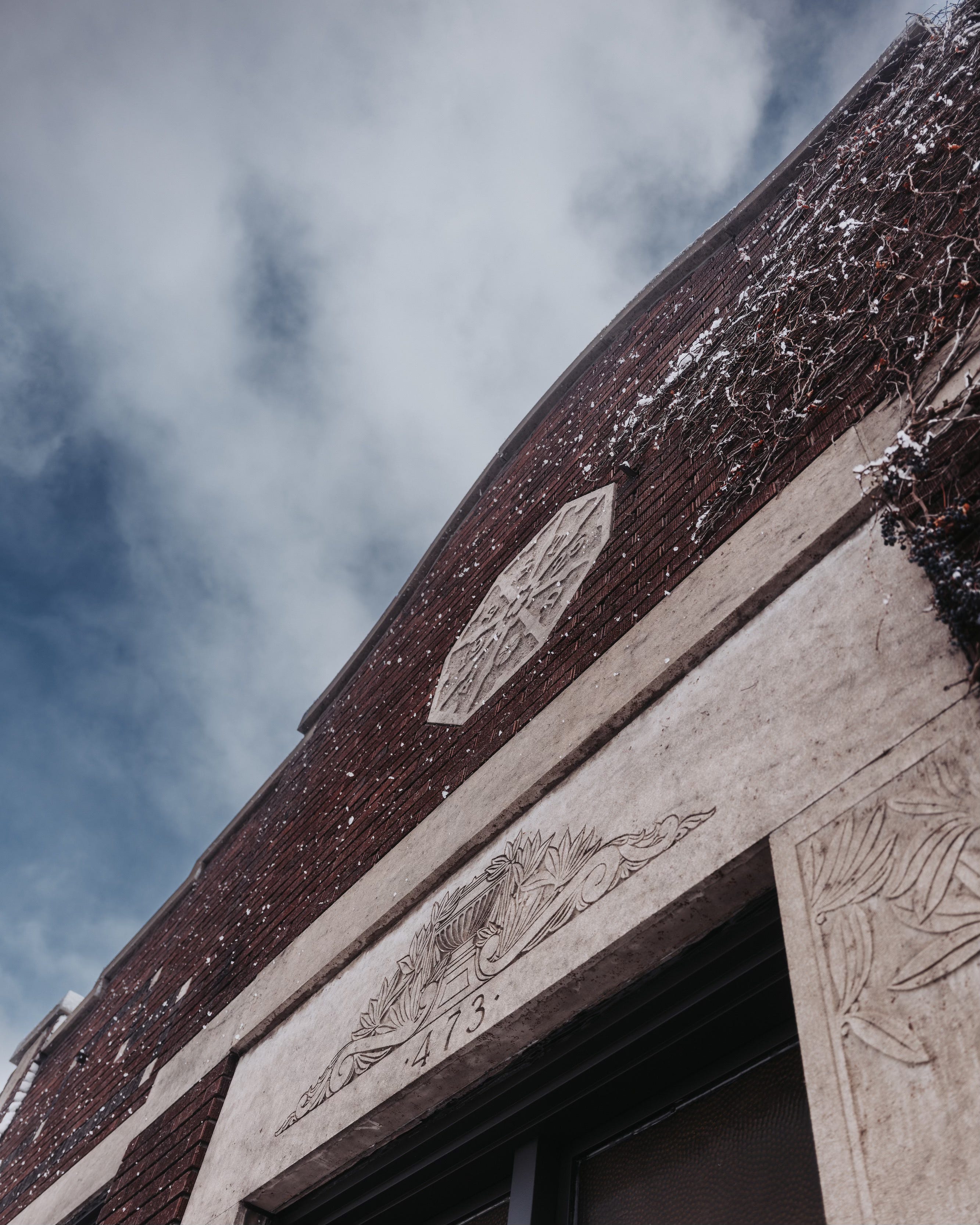
In the basement of FONO, there is a pile of headstones dating back to the 1800s—the work of George Brown and Sons. Dormant Virginia creeper climbs the facade above, dried berries clinging to vines in late winter. The FONO logo—a clean sans-serif with a speaker cone ‘n’—adorns panels of fluted glass. The headstones rest beneath a room about to come alive with sound.
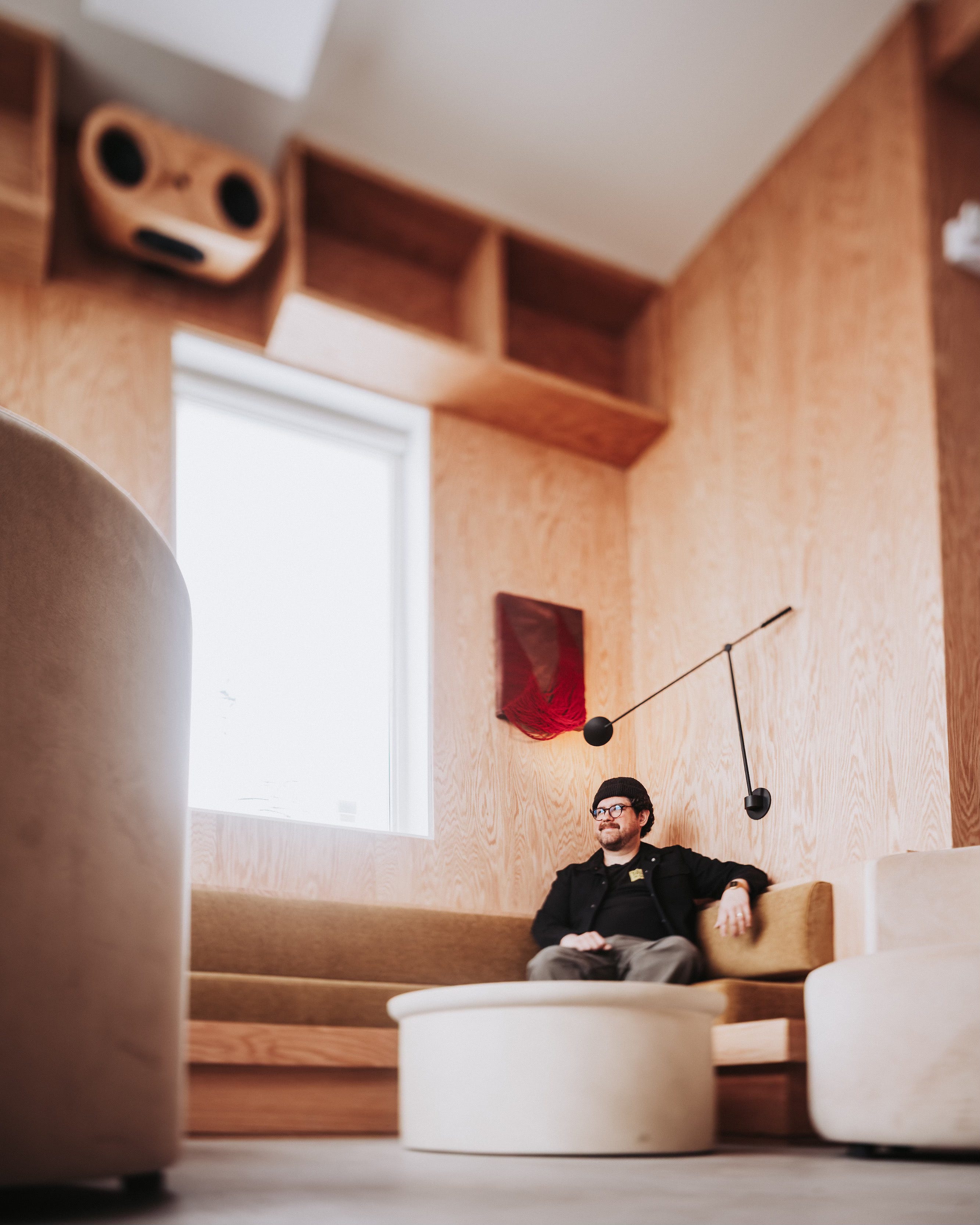
Matías Muñoz is making me a coffee. He’s unassuming and unhurried: black knit beanie over dark, curly hair, round tortoiseshell glasses, a Casio on his wrist. He pours water into a Moccamaster using beans from Lulo Coffee, an Ottawa roaster, and procures a terracotta mug. The room around us is on the verge of coming together on the morning of my mid-March visit. Blue painter’s tape clings to the trim; white panels lean, waiting to be hung. Despite the original December 1 target, Muñoz does not seem bothered, opting to get a room right over getting it open.
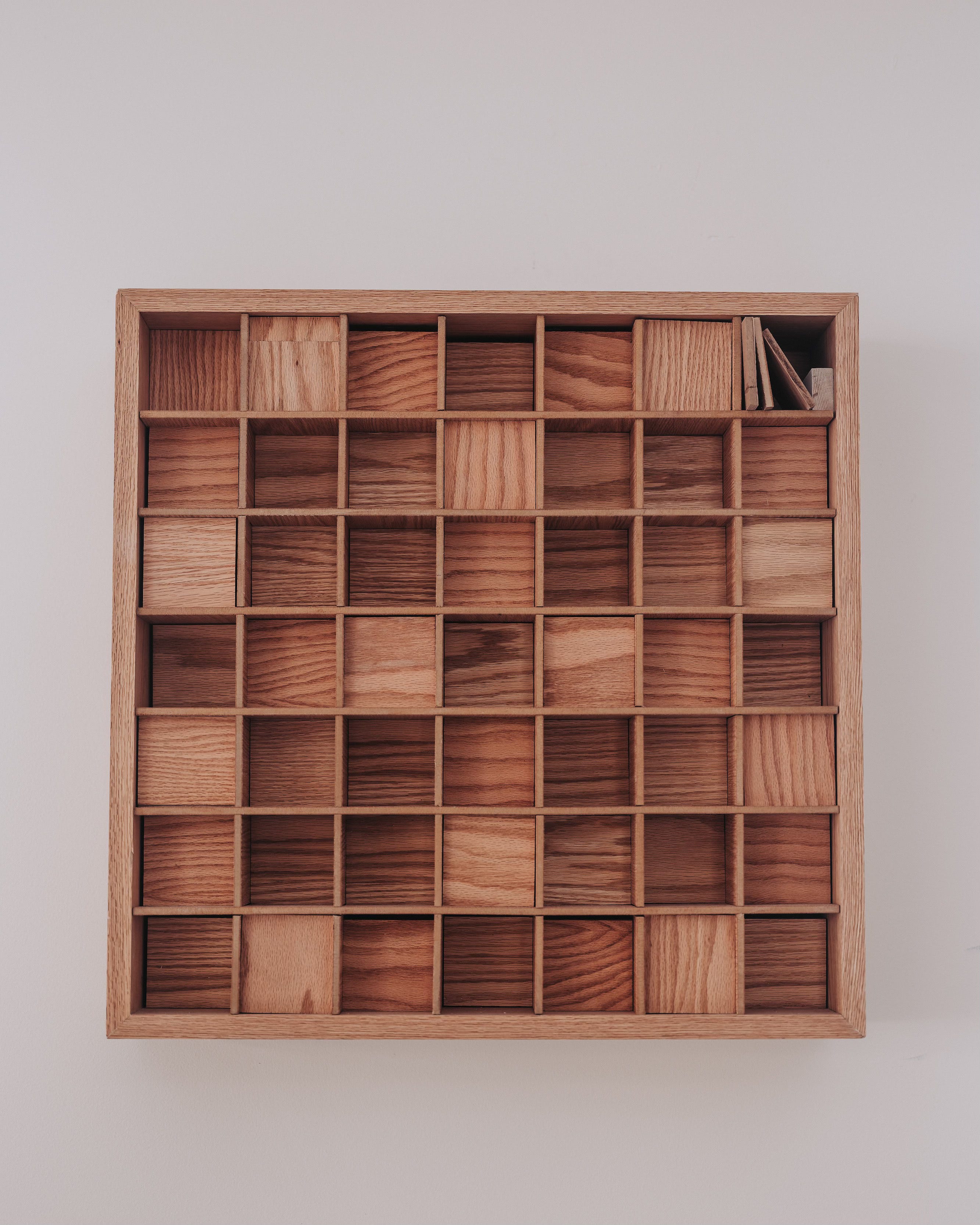
The walls are solid wood; they do something to the light. Amber mixes with the grain, catching the rim of the coupe glasses. Wooden quadratic diffuser panels are mounted sculpturally, pieces of art that happen to scatter sound and kill flutter echoes. Cylindrical acoustic absorbers wrapped in linen hang from the ceiling alongside paper-globe pendant lamps, the kind Isamu Noguchi made iconic. The bar sports tessellated white ceramic, a counter that reads as izakaya. It’s both mid-century and Japanese.
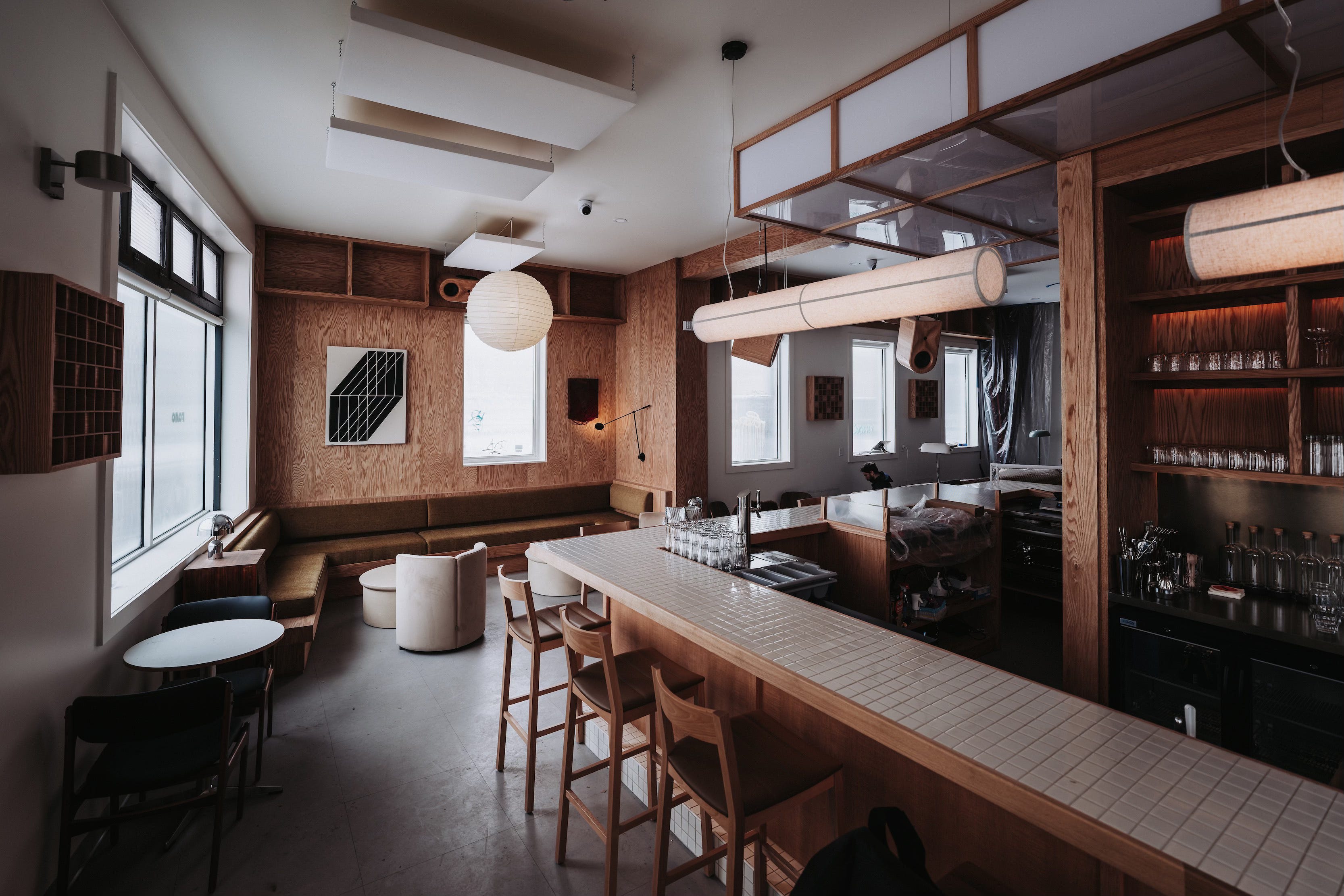
Muñoz puts a record on. The oak lends a low-end warmth you feel in the sternum, speakers overhead scattering the midrange, the diffusers breaking up the reflections. I’m in his living room—a space where someone chose the record, someone calibrated the speakers, and someone thought, very hard, about how this room ought to feel.
He moved to Ottawa from London, Ontario in 2008. His first sublet was on Gladstone, between Bay and Lyon—a few hundred metres from where we are standing. “This block specifically feels like home,” he tells me. “I’ve always been a Centretown person.” He has been called a community builder; bringing up the label makes him visibly uncomfortable.
For nine years, he and Eric Scharf ran Ottawa Showbox, a music blog that reviewed albums largely remaining in the 613 and profiled artists playing to a devoted room of thirty, all with equal reverence. In 2013, Muñoz acquired a brain injury in an accident. Showbox became a way to stay inside a community that had come to matter to him, and he kept at it for eight more years. After Showbox came Cinqhole, a not-for-profit venue co-founded with Anthony Cardozo and Scharf in Hintonburg—a grassroots space that opened in September 2019 and closed during the pandemic. Then Green Room, a rehearsal studio on Elm Street. Each project has been, in essence, a room of some kind.
But FONO was not the plan. Muñoz had, in fact, given up on the idea of building another room for music. He was expanding his rehearsal studios—scheduling, soundproofing, the unglamorous work—when a broker mentioned a detached building on Bronson.
“I didn’t think I was gonna get back into music,” he tells me. Then he walked through the door. “I was like, ‘You know what? I gotta pull something together.’”
I ask Muñoz to sit for a portrait. He settles into the banquette that lines the lounge wall, one arm along the back, and for a moment he is still, surveying the room with the look of a man taking inventory of his own ambition. It is the only time all morning he isn’t moving. Across the space, his contractor Justin is conferring with a colleague in the unfinished ballroom, in work boots and a beanie pulled low. Justin plays drums in the hardcore band Skull Gate. The audio-video installers are active in the local scene. The people building FONO are artists themselves.
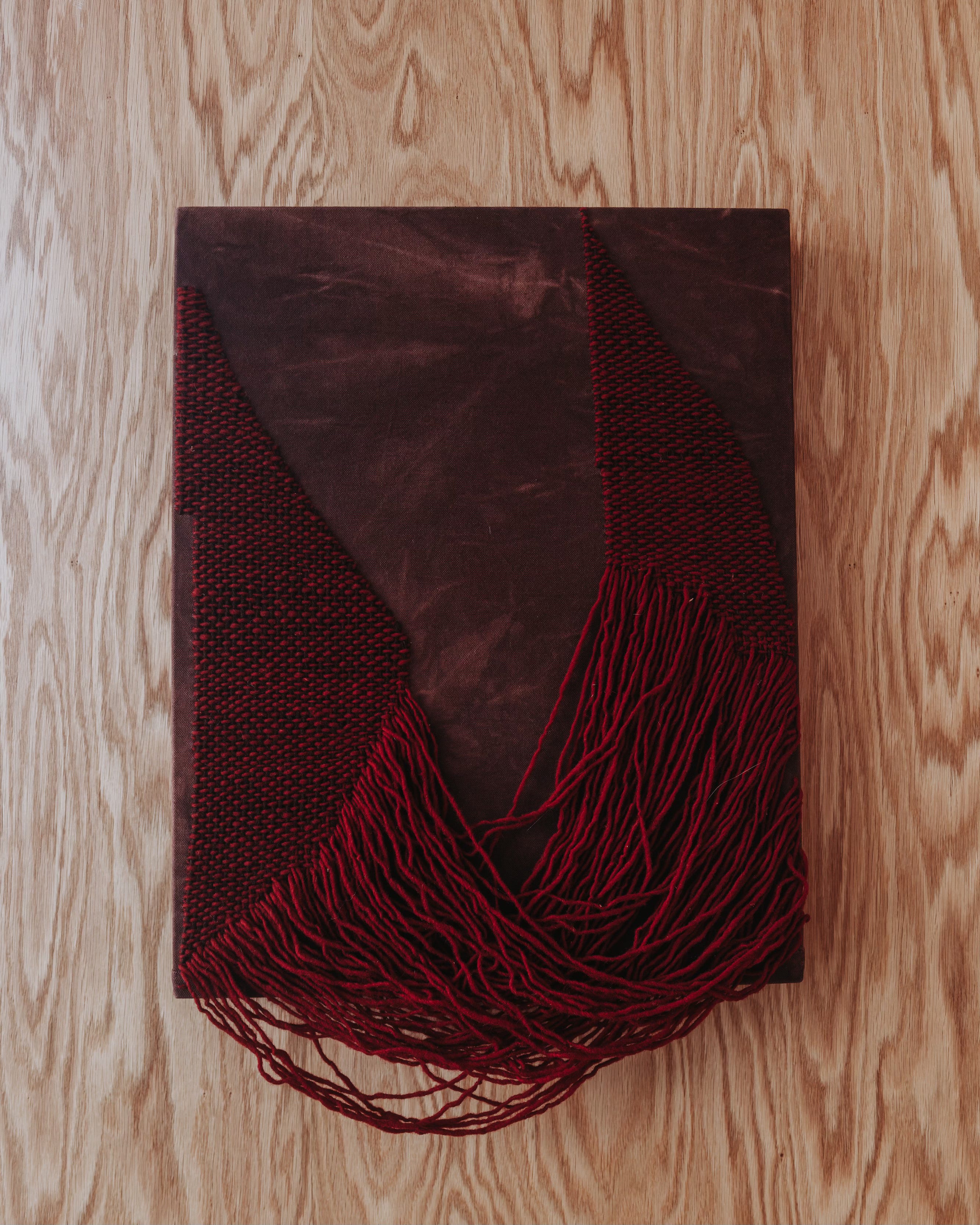
Though Scharf is supportive, this is a new chapter for Muñoz as a sole proprietor. His wife, Meaghan Murphy—a freelance creative director—pushed him to trust his own aesthetic instincts, to believe that steel, ceramic, and oak could cohere into a vision. They established the visual identity together—the red-and-black colour scheme, the speaker-cone logo that appears on the coasters and windows—and worked with Wei Sanchez Design Studio to bring it to life. On the wall above the banquette, a mixed-media textile piece by Claudia Gutierrez: deep burgundy woven fabric forming a broad V-shape on a dark panel, threads cascading off the edge like an unravelling fringe. The piece, according to Muñoz, reflects the same impulse towards thoughtful risk that drives the space itself.
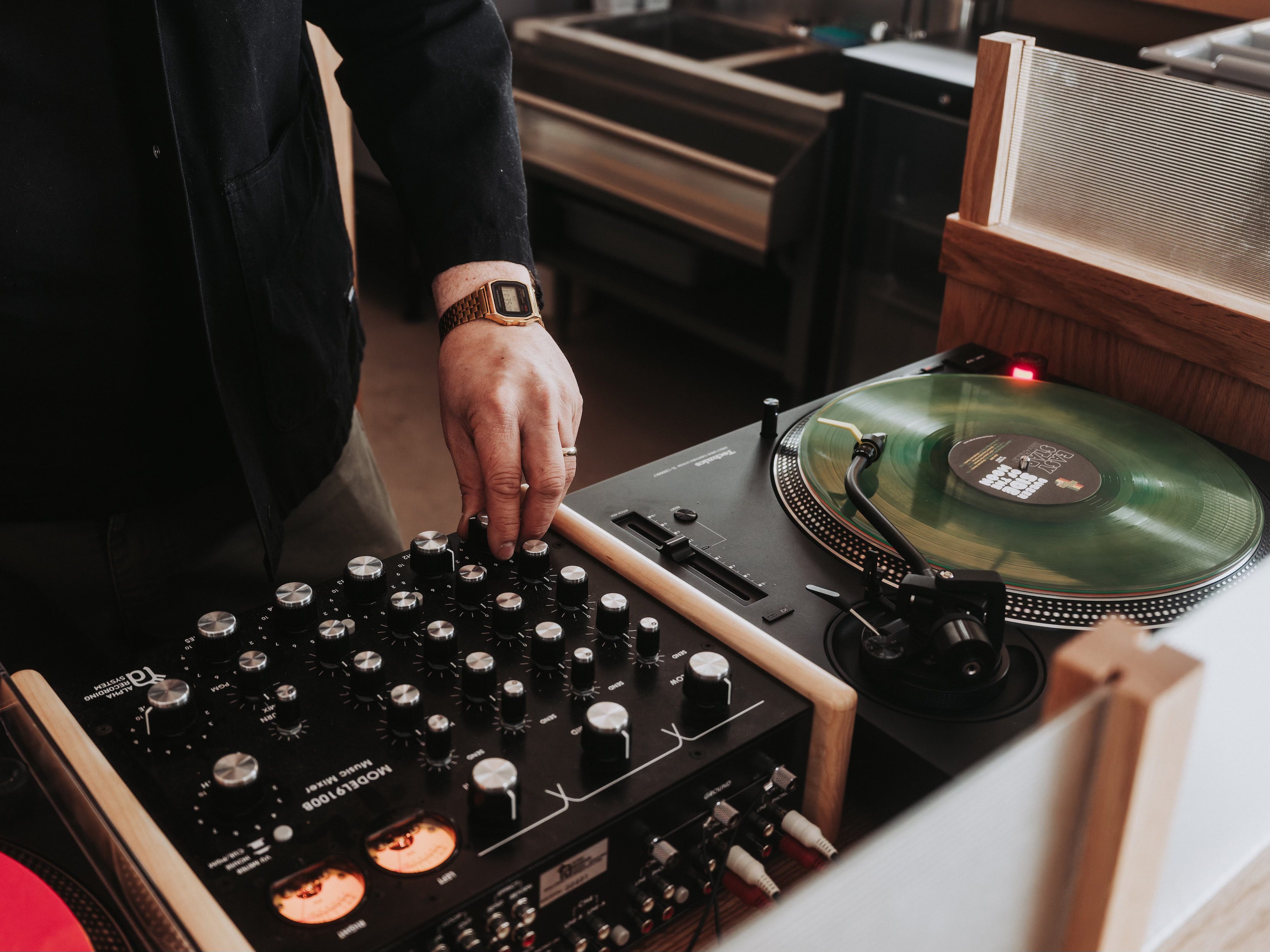
My attention turns to the vinyl. Muñoz picks up Easy Star All-Stars’ Dub Side of the Moon—the reggae-dub take on Pink Floyd—and turns it in his hands. A room that keeps King Crimson and a reggae reworking of Dark Side of the Moon on the same shelf tells you something.
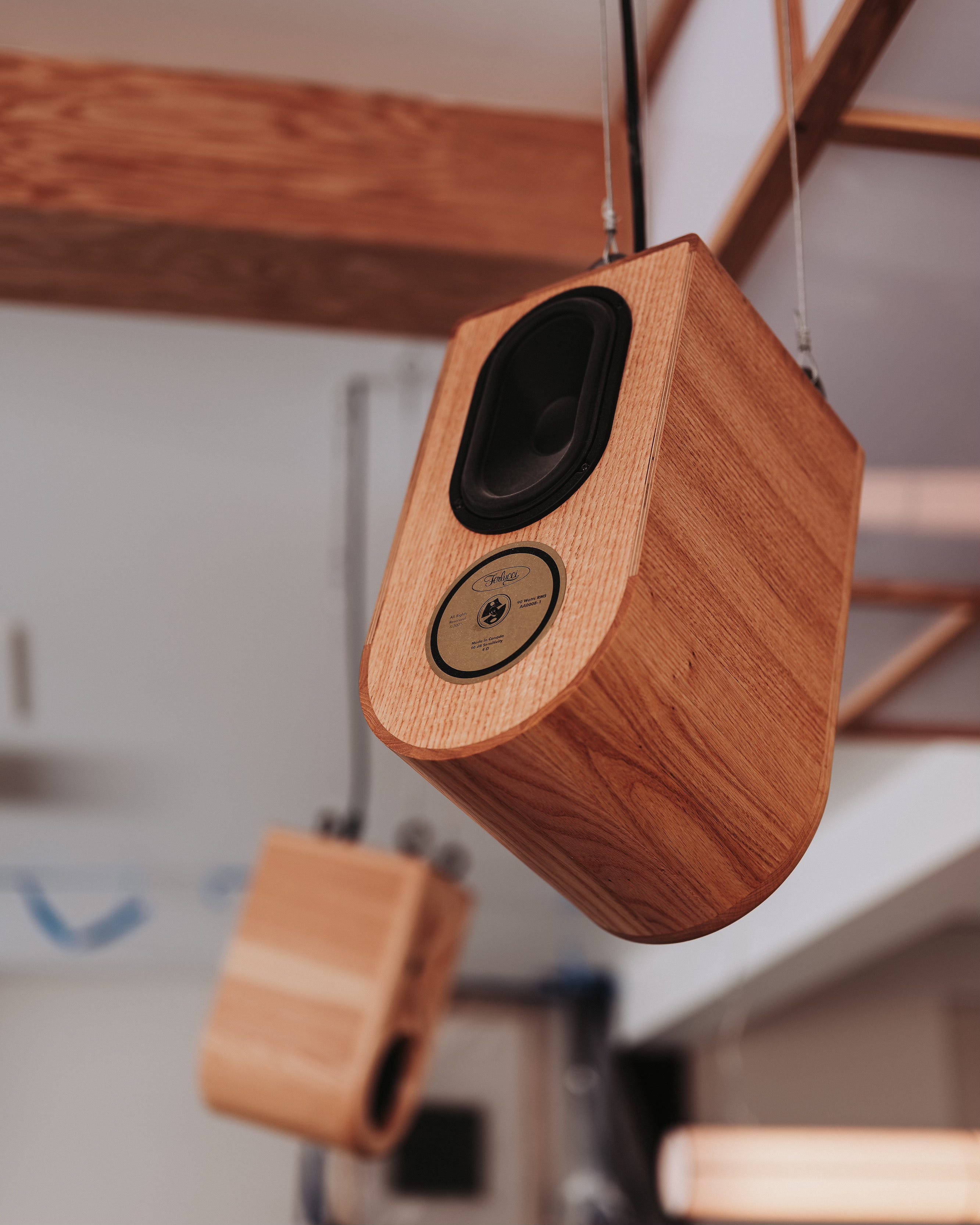
The speakers are the centrepiece. Sculpted from Douglas fir by Automatic Audio, a Montreal outfit, every cabinet is assembled by hand. The Ferlucci models hang from the ceiling on attenuated cables. Behind the bar, a larger unit dominates the back wall, flanked by backlit shelves of glassware. Two Technics turntables nestle in fitted oak surrounds, complemented by an Alpha Recording Systems 9100B rotary mixer, handmade in Japan—no crossfader, just a set of smooth, circular knobs. Mixes are slow and patient. A FONO-branded red slipmat completes the set.
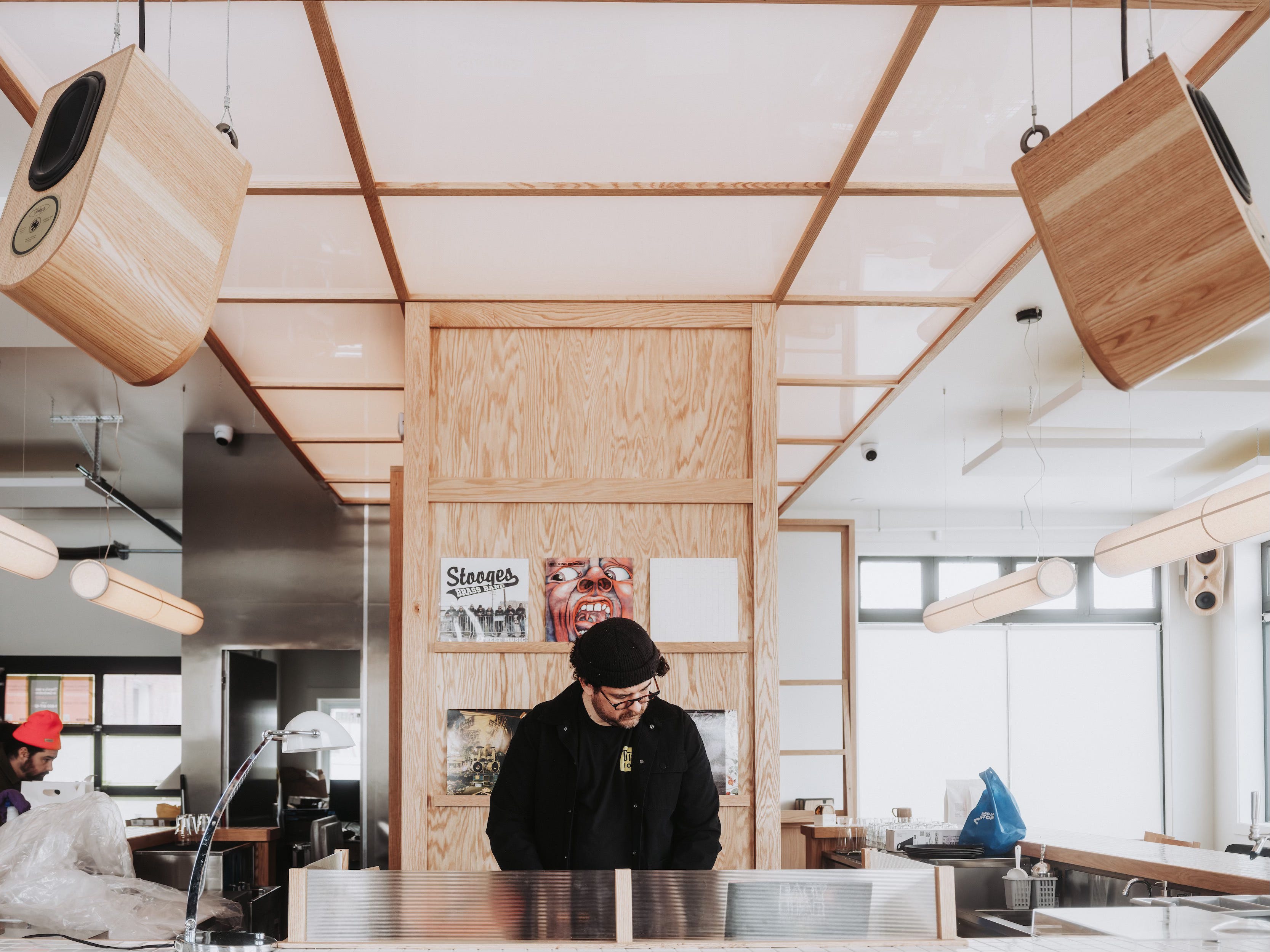
Across the room on the wall, a tablet glows with Tidal on tap. Muñoz is not a purist, and doesn’t want FONO to be a place that makes anyone feel unwelcome for however they listen—“we don’t wanna keep anybody out,” he says. The vinyl is of course tactile, tangible, and deliberate; it’s a favoured way to support a band. There will be all-vinyl events. But the deeper argument is about attention: how it has been wrested from us, and how it can be returned.
I mention the listening stations at CD Warehouse, being a tween around the turn of the millennium, trialling Jimmy Eat World’s Clarity on headphones of a quality I’d never experienced—and Muñoz lights up. Core memories. For him, it was Green Day, hearing Dookie for the first time as an eleven-year-old was transformative. Same store, same age, different band.
Since then, streaming has changed not just how music is distributed, but how it is written. On Spotify, a song must be played for thirty seconds to count as a stream. Intros have shrunk from an average of twenty seconds in the 1980s to around five today. Choruses arrive earlier, bridges are vanishing, and songs are getting shorter. Composition has bent towards the logic of the skip button.
∗ ∗ ∗
The jazz kissa emerged in postwar Japan, when imported records were too expensive for most people to own. An owner would invest in a formidable sound system and charge a cover for the privilege of sitting in a dimly lit room and listening to his collection. Conversation was discouraged; in some kissas it was forbidden. In the past decade, a Western variation has spread—Brilliant Corners in London, Public Records in Brooklyn—rooms that draw the same line between high-fidelity audio and the social conditions of attention.
While Muñoz admires the kissas, he’s not quite transplanting the idea. “The core of this place is experiential,” he tells me. Yet the Daruma dolls adorn the shelf. The paper globes hang overhead. The diffuser panels echo kumiko woodwork. The room carries its influences openly. The name is another layer—FONO, derived from phonograph, and also a word from Muñoz’s Chilean heritage. But where the kissa arose from scarcity—records people couldn’t afford to own—FONO arrives inside a different problem: abundance without attention.
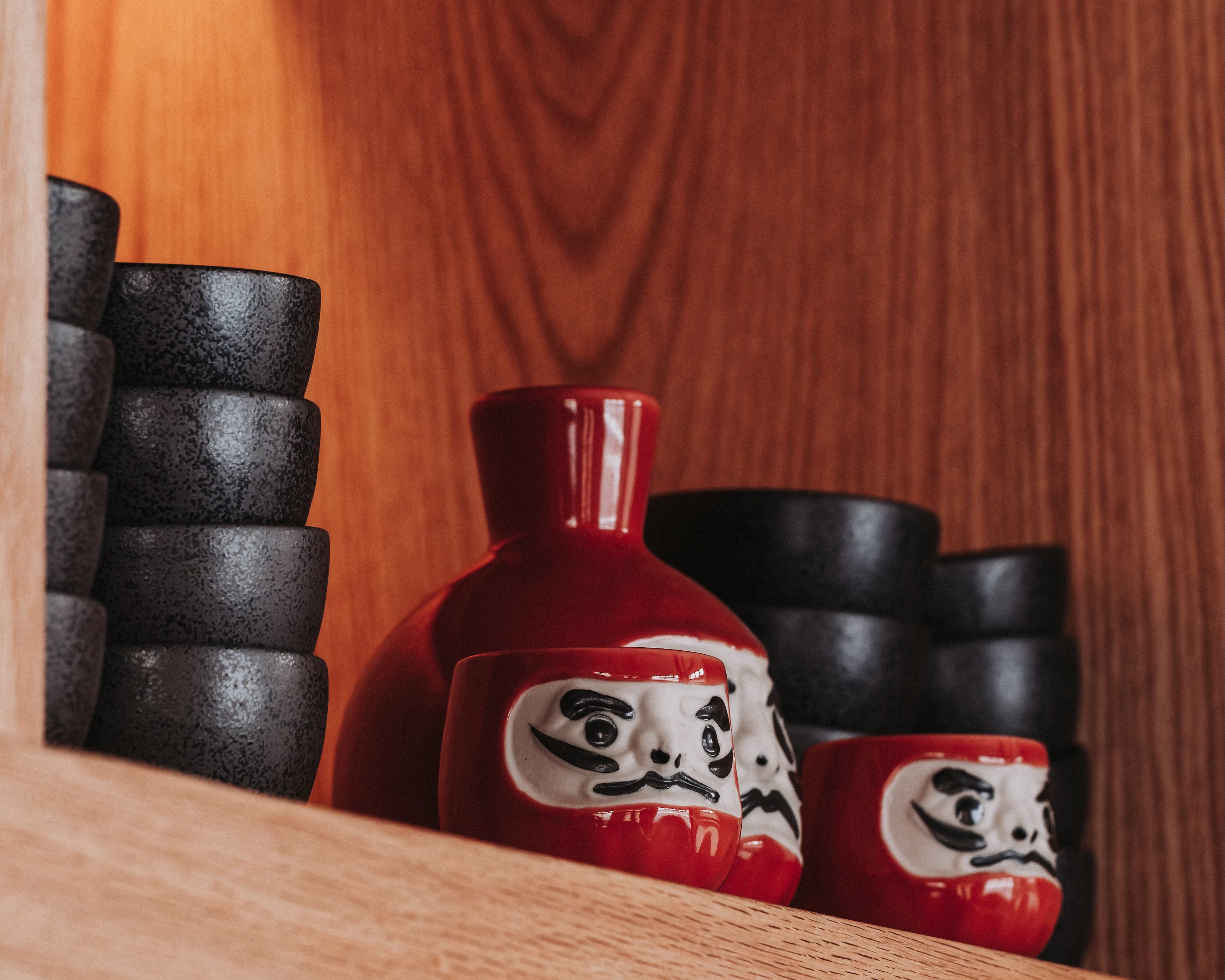
Streaming platforms host over a hundred million tracks; in 2023, according to Luminate, nearly a quarter of them—forty-five million songs—were not streamed once. Everything is available; comparatively little is found. “Artists are trying to swim upstream,” Muñoz says. “It’s tough to know how to beat the algorithm.” The implication is that you don’t beat it. You play a different game.
The kissa master’s answer to expensive records was to build a room with a great sound system and charge for the privilege of sitting in it. Muñoz’s answer to the attention economy is not so different: build a room, choose the records, and give people a reason to stay.
Muñoz doesn’t frame FONO as a rebellion; Tidal remains. But a room where someone is encouraged to put on a full side of a record—and the room listens—is a different proposition entirely. “Venues and spaces, I think, matter a great deal,” he says. He says it plainly, and follows it with pragmatism. While careful not to claim that FONO is arriving inside a broader wave—Old Ottawa South’s Red Bird, Live Nation’s History, and Baseline Road’s Cassette 613 come to mind—he’s not naïve to the landscape. “I think there needs to be a bit of a renewal of the concept of a music venue so that they can be sustainable,” he tells me, drawing a comparison to the brewery boom of the 2010s, producing a glut of beer brands that are beginning to struggle as demographics shift.
FONO is designed for flexibility: a hi-fi lounge some evenings, a concert venue others; corporate events and weddings are very much on the table. “The whole point of this place is to be very flexible, very modular,” he says. The concert calendar is deliberately leaner than you might find elsewhere, but with no lack of curatorial ambition: Saint Clare’s album release, Toronto’s Mage Tears, and Ex-Luthor are among the artists who pepper the opening months. The kitchen follows a similar logic: no hood fan, no gas line; everything electric. Pat Muir, a chef from Arlo, was tasked with building a menu of small plates—elevated, assembled with care and precision—within the constraint of preserving the room’s acoustic integrity.
When I bring up other venues, Muñoz is direct about Live Nation: It is, he says, a predatory company. FONO seeks the opposite, with a long-term plan including a profit-sharing model in which a portion of the bar sales goes back to the artists at the end of the night. “We’re not taking a cut of anything,” he says. The model is untested, but given his history, credible. Cinqhole ran on a revenue-share model; the ethic hasn’t changed.
I ask what a bad night at FONO looks like. Muñoz pauses. He turns to accessibility, pointing out the space is fully accessible, with a universal washroom. He asserts that the goal is to make everyone feel welcome. The answer has nothing to do with attendance; it’s about hospitality, and more intrinsically, belonging. He connects this to his own story—getting involved with Showbox, taking up DJing, finding a community. These things changed his life, he says. If FONO can provide the setting for that to happen for someone else, it’s doing what it was built to do.
He asks if I take milk in my coffee, then heads to the corner store to get some. When Matías comes back, gold Casio catching the light, carton of milk in one hand, I tell him I should probably get out of his hair. A man in the midst of building a venue from scratch, acoustic panels still to hang and projector still to install, has taken a few minutes to get milk for a visitor’s coffee.
He insists I take my time.
Great news! I’m always happy to hear of a new live music venue. These places are incubators for local talent and important cultural spaces for community-building.
"Choruses arrive earlier, bridges are vanishing, and songs are getting shorter. Composition has bent towards the logic of the skip button."